Multimodal Methods and Psychodynamics
In my practice, I have been exploring how multimodal methods can be integrated with techniques of psychodynamic psychotherapy. I have been paying close attention to how I was structuring inquiry sessions, letting the methods interact emergently and organically. The most important moments were those where multimodal and psychodynamic approaches were spontaneously combined. I noted such moments and inquired into them, trying to see how the two approaches interacted and whether using just one of them might have changed the outcome.
Below, I provide some evocative examples from my work. (People who participated in these inquiries gave me their consent to discuss our work and share their multimodal creations.)
Multimodality highlights connections between cognitive realisations and emergent behaviour
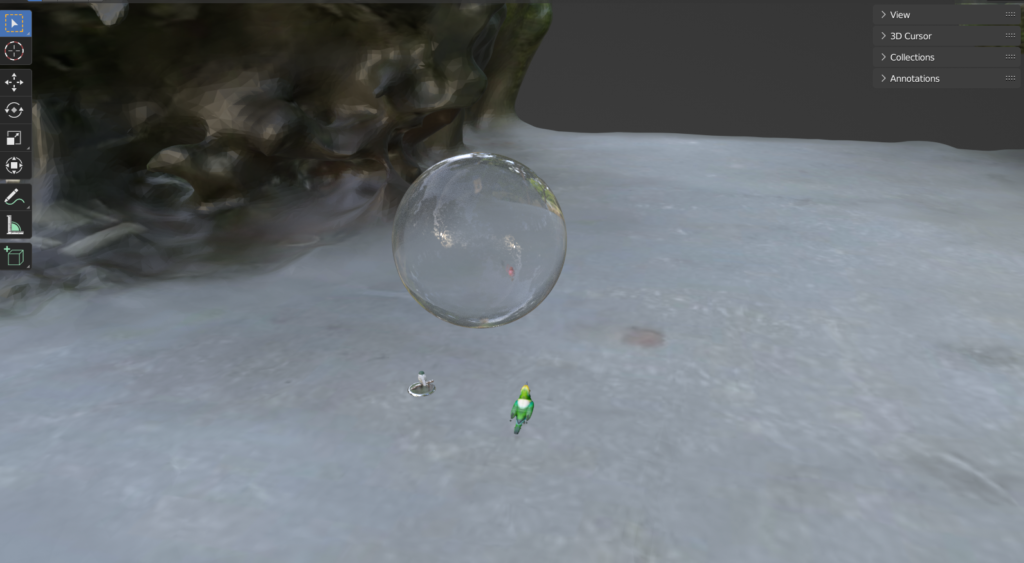
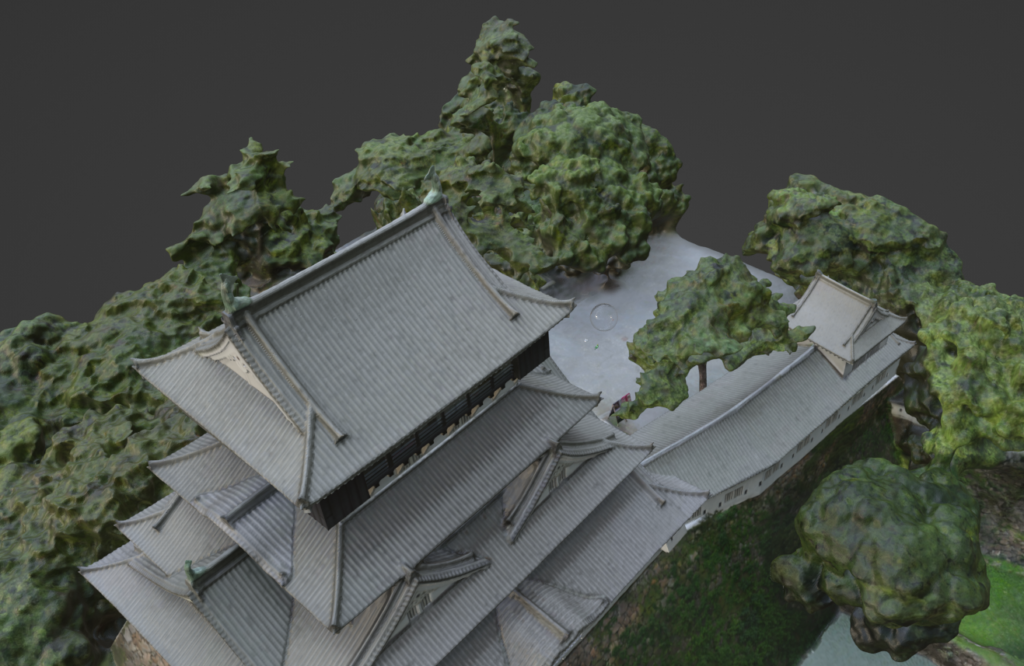
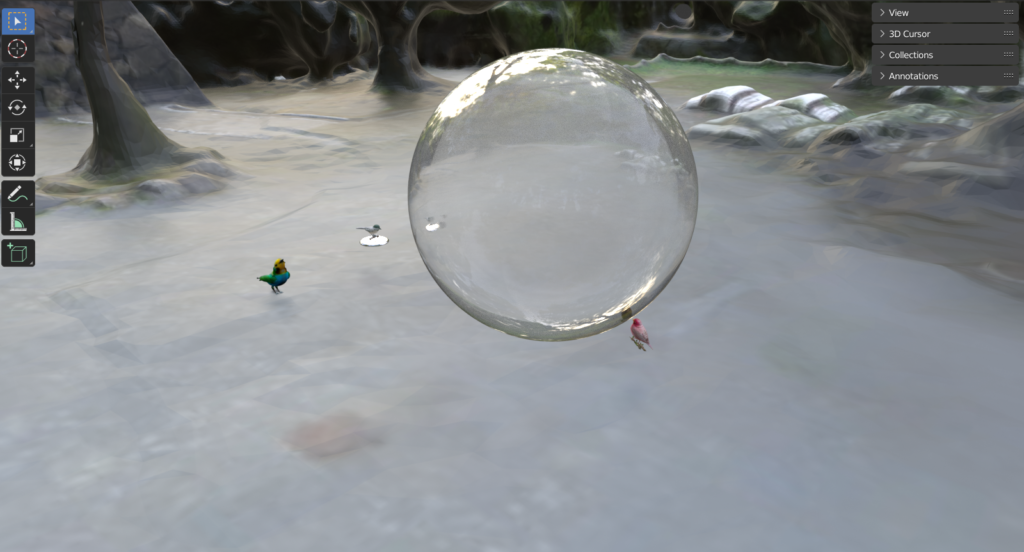
Mr. George is a 29 years old man with a strained relationship with his nuclear family. At the beginning of our sessions, Mr. George underlined the difficulties of his relations with his father. While talking, he looked overly anxious, confused, and very involved. However, at the following meetings, he avoided touching this topic in a direct way.
At one of our sessions, Mr. George was co-inquiring with Mr. P (who is roughly two times older), and I was companioning. Mr. George and Mr. P were creating a shared space in a 3D-modelling program. While the process was initiated by Mr. George, he was somewhat “shy” in taking the space, only placing a smallish house and a yacht for himself; at the same time, he was helping Mr. P quite a lot. In contrast, Mr. P placed a large castle and a big ship. Mr. P enjoyed the majesty and brightness of his objects and praised Mr. George for his help. From the outside, it looked as if Mr. P was the owner of the space.
I asked about their feelings and plans for this work. Mr. George said that he was happy that Mr. P was around and it was important for him that Mr. P participated, and he did not feel ignored. Mr. George did not notice Mr. P’s dominance in the space and was grateful to him for acceptance. At this point it occurred to me that this interaction resembled Mr. George’s relationship with his father. I bracketed my emergent resonance in — and it resonated with Mr. George as well. In subsequent sessions we discussed this subject in a more cognitive and structured way, and then shifted back to multimodal approach. Mr. George tried to re-structure their space with Mr. P, so that their relationship and interactions were more balanced. Later, Mr. George told me that this connection between a spontaneous emergent moment and a cognitive, structured description of his father’s behaviour was a turning point in his inquiry.
Multimodality and psychodynamics help to explore conflicts between emotional and rational
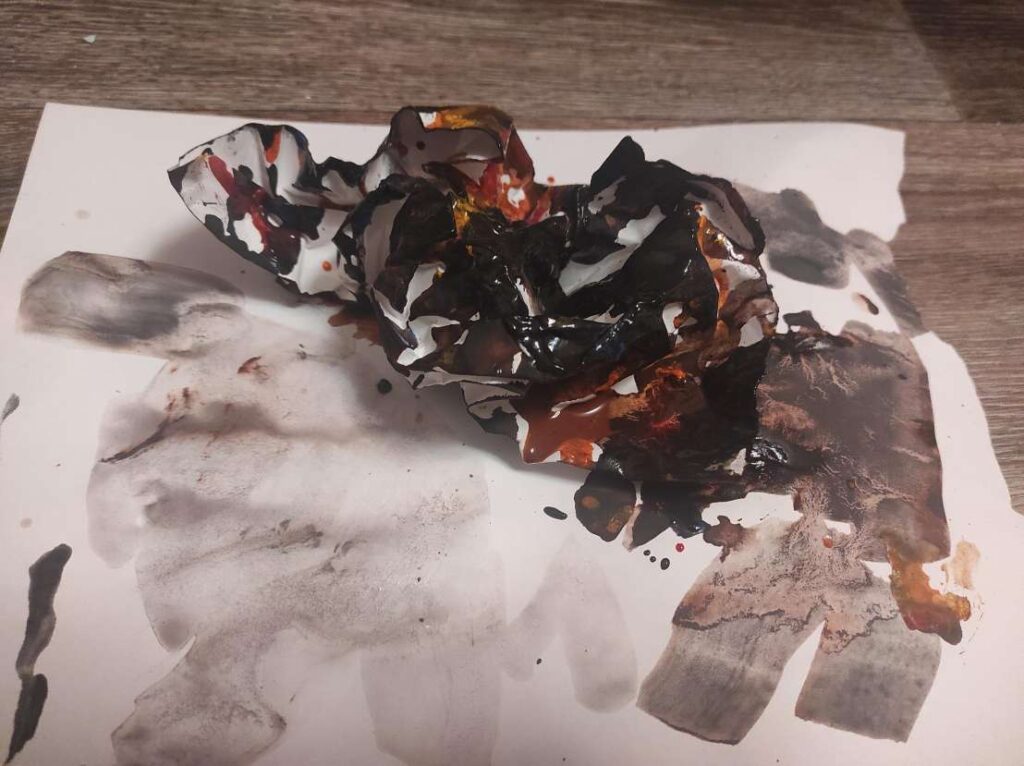
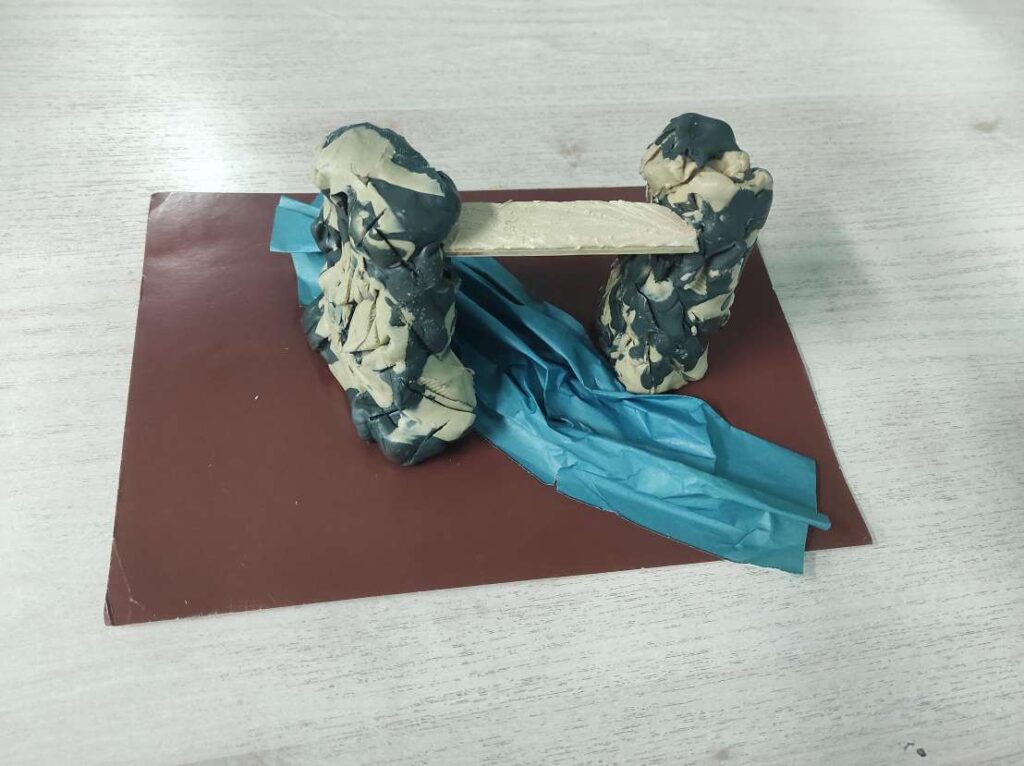
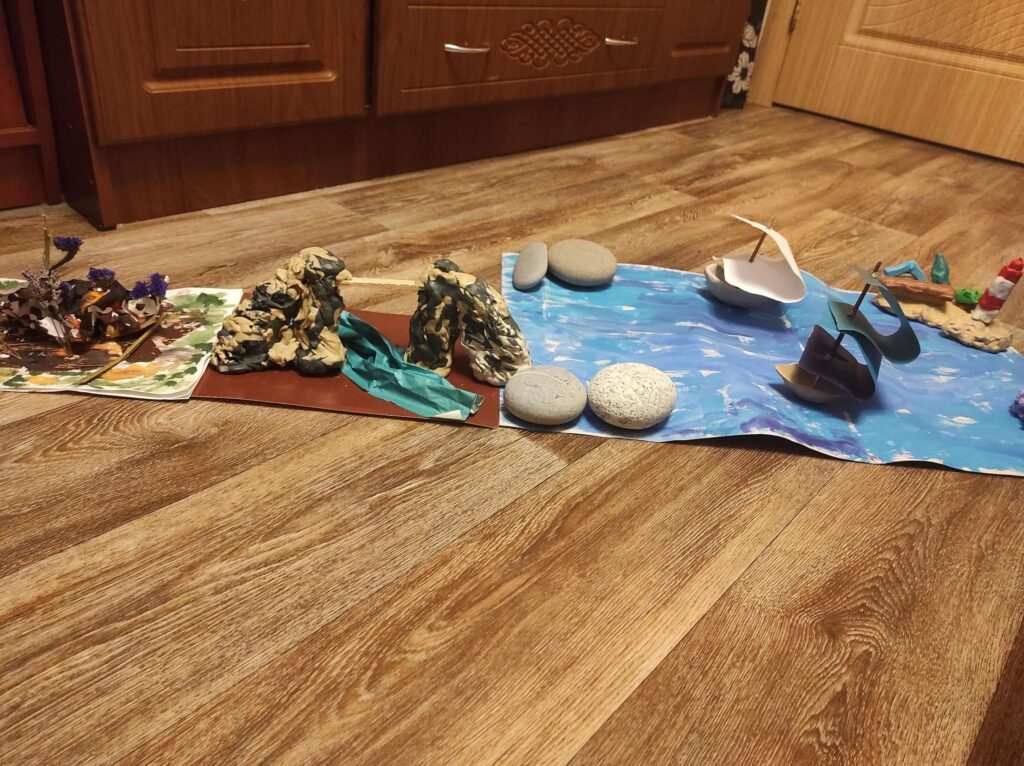
During our sessions with Ms. V, we explored her attitude towards herself and towards the life situation she was in. When we discussed it, Ms. V was cheerful and seemed generally happy. However, during a multimodal inquiry, she spontaneously created a twisted, crumpled, brown object. She was surprised herself and suddenly felt extremely negative towards her creation. This led her to realise that her cheerful attitude was just a surface, underneath which she had a lot of tension and disgust towards her life circumstances. Once this attitude surfaced, we could alternate between multimodal and verbal techniques to address both sides of her connection to reality. In our later sessions, Ms. V expanded her original creation, going beyond it and constructing a bridge towards a new world in which she would feel happier — in a sense, integrating the two conflicting sides of herself.
Psychodynamics helps to integrate emergent realisations
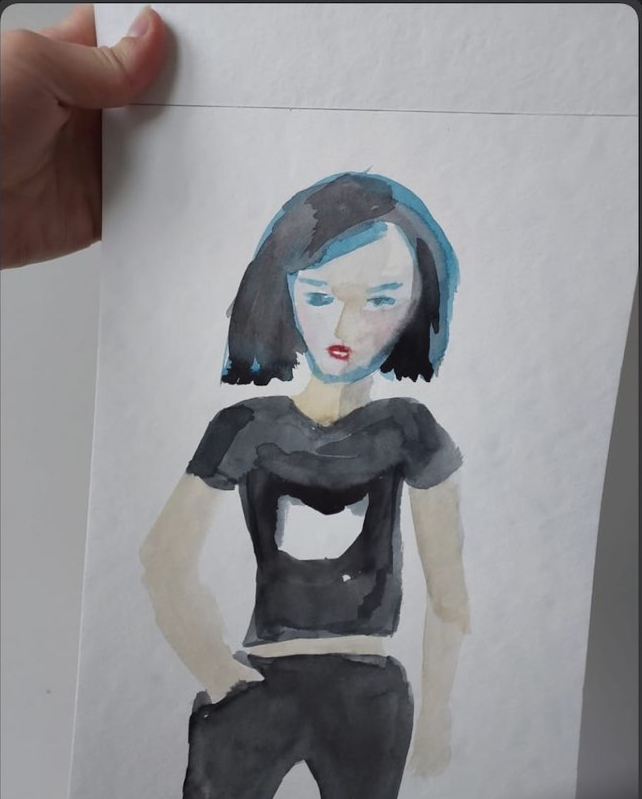
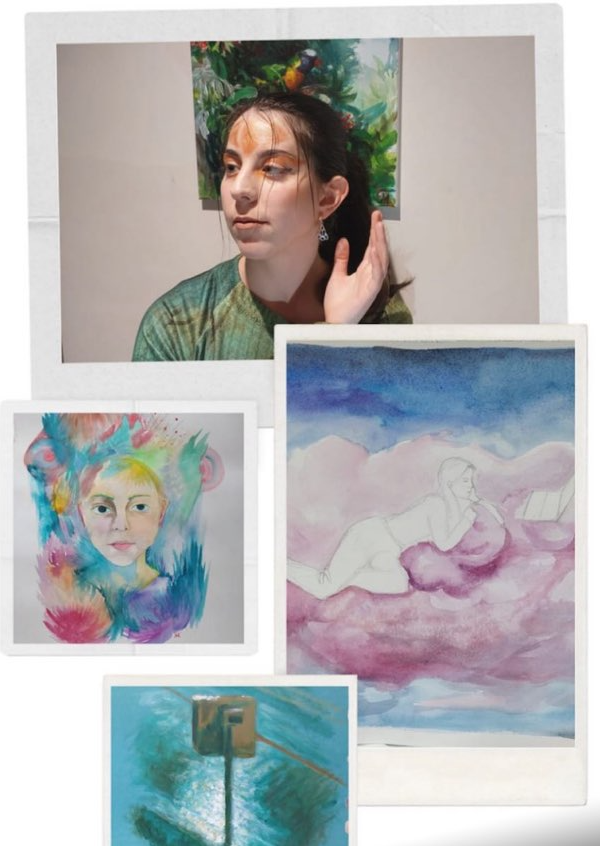
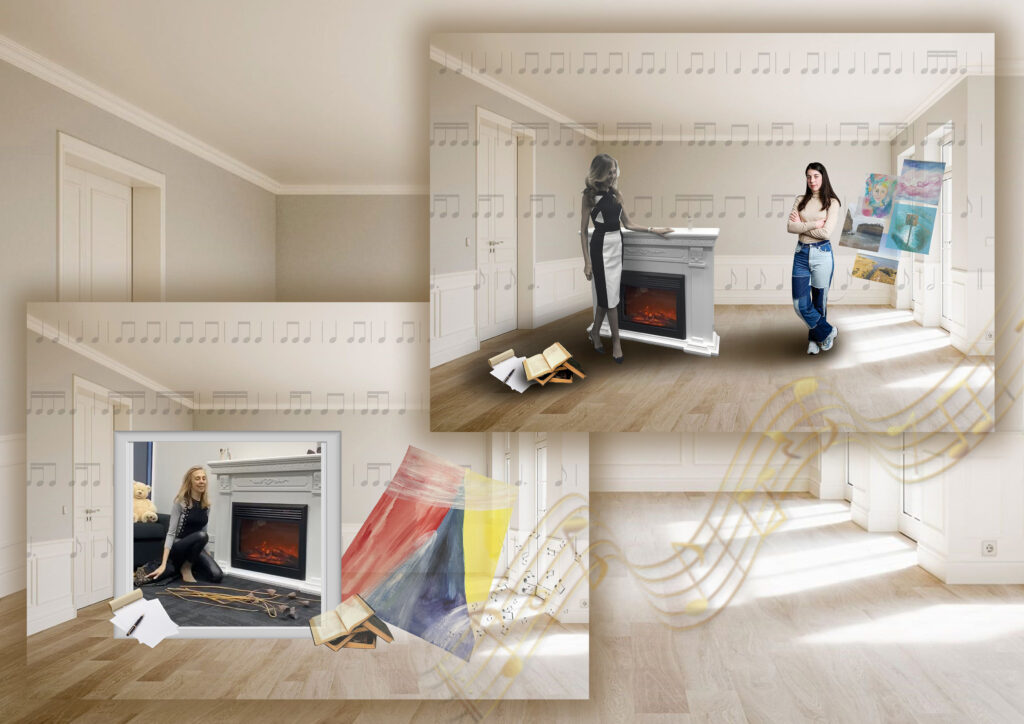
When we started working with Ms. M, she was unsure about what she would like to do in the therapy. She had a lot of stress and anxiety in her life (including due to external events beyond her control). We worked predominantly with paintings and drawings. Despite very relevant stressful events, the themes that gradually emerged in Ms.M’s multimodal creations had to do with gender and sexuality. She was surprised and somewhat distressed at that, as these things were not on top of her mind. Different bits and pieces kept emerging spontaneously for a while. In parallel with this process, we were discussing these materials from a more rational point of view, clarifying their meaning and values in the life of Ms. M. These discussions provided a gentle framework in which emergent multimodal realisations could find their place and become integrated around a picture that Ms. M has about herself.
Multimodal methods help structure emerge from chaos
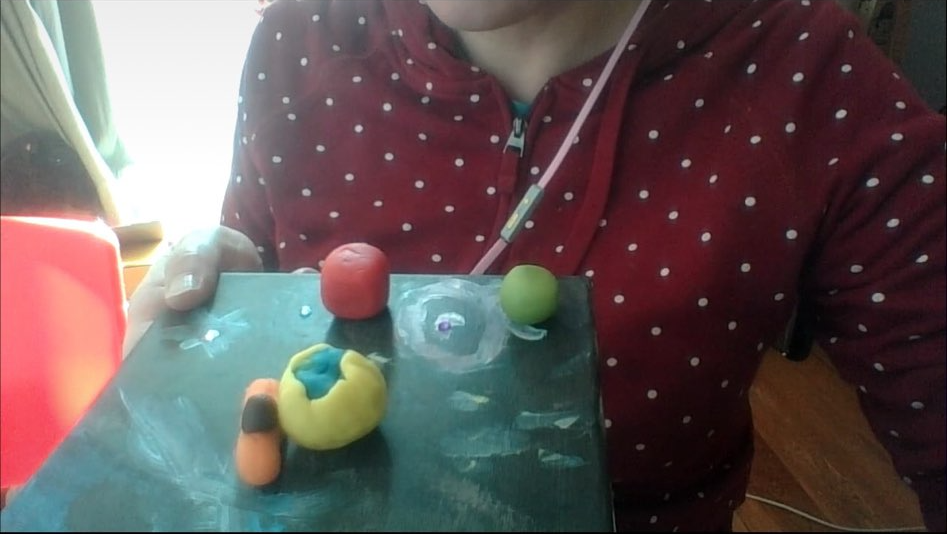
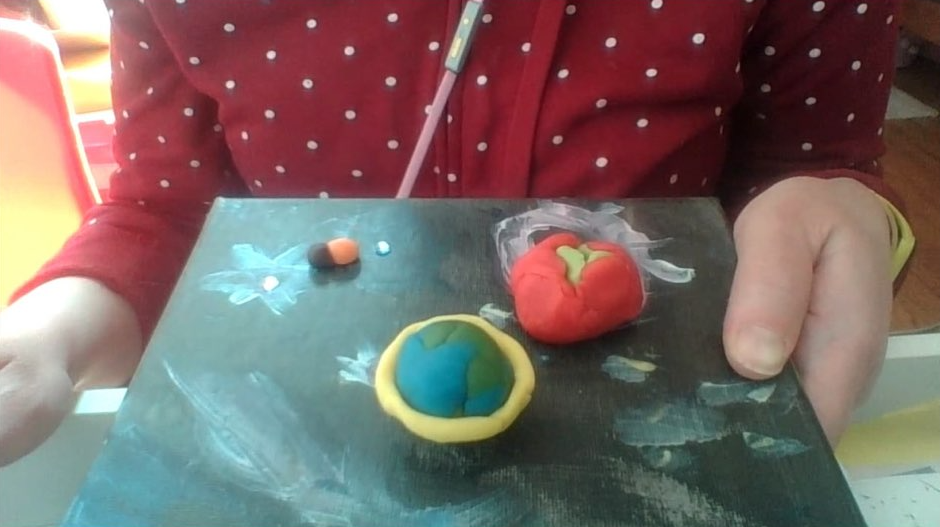
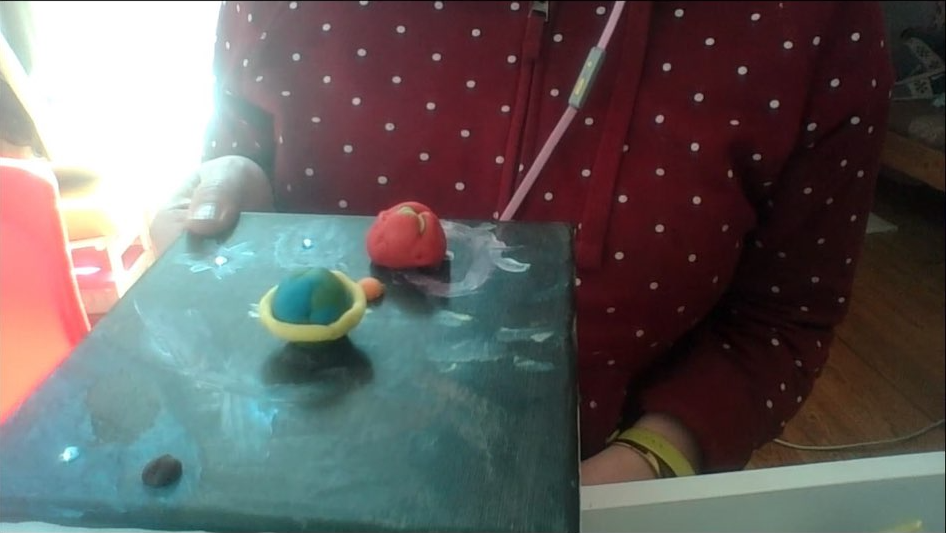
In most cases during my practice, it was psychodynamic techniques that I associated with structure. However, my experience with Ms. Yu showed my that multimodal techniques can also help structure to emerge. In our sessions, Ms. Yu explored her relationship with her husband and family. The relationship was complicated, and so were Ms. Yu’s emotions. It was difficult to verbally analyse them, as Ms. Yu could not always cleanly differentiate her feelings, they were mixed and ambivalent. I suggested that Ms. Yu use plasticine to explore what was going on. She started with creating several shapes, using multiple colours, and that in itself helped to impose some boundaries on her experience. She could now see different parts and openly manipulate them with her hands. As our work progressed, it turned out that some parts were associated with Ms. Yu’s feelings towards her husband, others — with her children, and yet others — with her own values that she tried to protect. She was gradually modifying the shapes over the course of multiple sessions, growing ones and reducing the others, combining them and locating them at different spots on the table. Finally, we arrived at a visual structure which was connected to her emotions, but which was more explicit and understandable — it was clear, which components were present and how they were positioned relative to each other.
At some point, Ms. Yu realised that one of the shapes (which had a large black part and a small yellow part) caused her an excessive emotional response – tension and distress. She bracketed it in and associated these colors with herself (black) and her husband (light). Ms. Yu started working with this piece, making the black and light parts equal in size and interpreting this as she and her husband were of equal importance — but she was surprised by the recognition that they had so far been glued tightly together. She realized that it was this gluing that caused her this unbearable tension. After that, Ms. Yu separated these two parts and set them far apart feeling relieved and more free.
At this point, we were able to switch to psychodynamic approach again, to analyse this structure more explicitly and draw connections with Ms. Yu’s past experiences in her childhood family. Ms. Yu told me that such creating this visual structure emergently and multimodally really helped her to find her place, and she was very keen to keep working using art therapeutic techniques.